What the editor found wrong with my first chapter
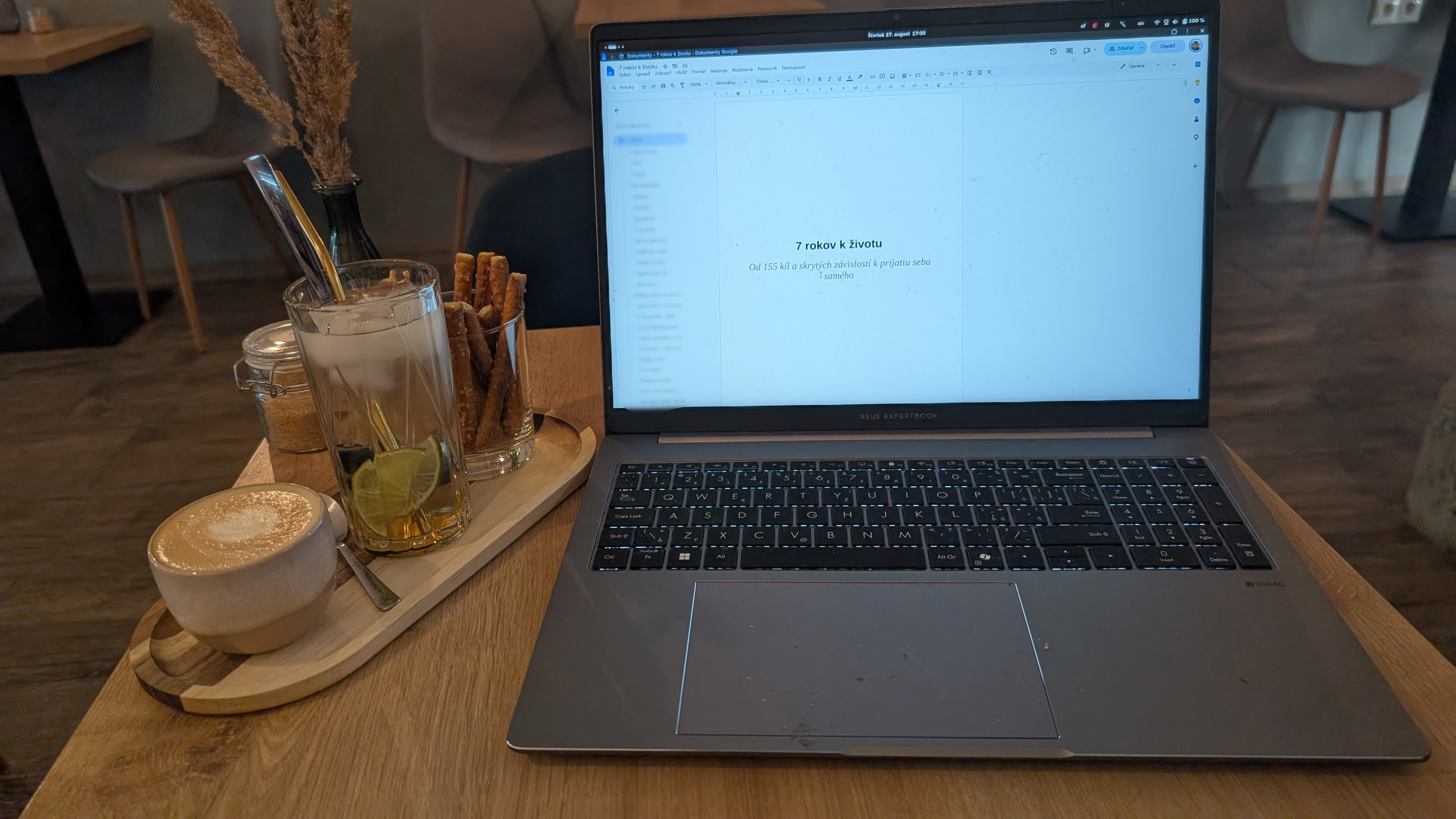
First editorial feedback
Having a finished manuscript is one thing. From there it is still a long way to a book.
When you write the last sentence, you feel like you are done. You are not. You have raw material. Then comes a series of stages I knew nothing at all about two years ago: developmental editing, copy-editing, typesetting, cover, print. And the first one is the most unpleasant of them.
Developmental editing does not mean fixing typos — that comes later, in copy-editing, and a different person does it. The editor deals with whether the text works. Whether the chapter is built right, whether you get bored somewhere, whether what I want to say is actually what I am saying. She reads the manuscript and then tells you how bad your book looks. That the content is interesting, that it has force — but it cannot go out like this. Not a chance.
How it started
I went through this for the first time a year ago. I sent the manuscript to the Publico publishing house. They read all of it and got back to me fairly positively. At the same time they wrote that a lot of rewriting would be needed.
At that point I had just finished the last chapter. I was at the end of my strength, and when I imagined how much work was still ahead of me, I lost the will. I closed the document and left it at that.
A year passed. I gave the manuscript to the people closest to me to read, and they told me one sentence that started the whole thing up again: that it should not stay in a drawer.
So I dusted it off. I googled editors, wrote a few emails. Most of them never replied. To one of them I sent samples and she liked them — she even wrote that she saw places where I could write it even more rawly. That was the sentence after which I knew I wanted to try working with her. We agreed on a trial edit of one chapter. She would see whether it made sense. I would see whether we understood each other.
Last week she sent me the comments. Today I sat down with them.
What that kind of feedback looks like
I had imagined a list. It is not a list. It is a document with my text in it, with notes written into the margins — somewhere a single sentence, somewhere a whole paragraph. In places she wrote out how she would rephrase the passage, so I could see the difference and compare. Not so that she would write it for me, but so that I would understand what she meant.
Most of the comments are not about style. They are about what is missing from the text.
What she found wrong
Moments dealt with too fast. This is the biggest weakness. I have the most important events summed up in a few sentences. The first dose. Addiction taking hold. Losing control. The start of treatment. It all goes by so fast that the reader does not even get to live through it. She wrote that these are exactly the places that would call for a concrete scene — not a summary.
An opening that gives away the whole chapter. I open the chapter in italics. Except that italic passage tells the whole arc in advance, and the main text then walks the same road a second time. She suggested the opening should build tension instead of dissolving it up front.
Repeating the same devices. This surprised me the most, because I had not noticed it at all. Short standalone sentences. The "not… not… but…" construction. Over and over "and I…". Metaphors of dark, light, rock bottom, voice and silence. When there is too much of it in one paragraph and everything carries the same dramatic weight, the result feels contrived. The exact opposite of what I want.
Sentences that contradict themselves. In two places I wrote something that means almost the opposite of what I wanted to say. While writing I never once saw it. She found it in a single evening.
A list instead of an experience. One paragraph is an enumeration of terms — delusions, fear, collapse, diagnosis. I named it but did not show it. And the paragraphs that follow show it very convincingly. So the list only weakens them.
The ending is the weakest part. After very concrete and unpleasant experiences the text slips into general motivational sentences. She wrote that they are true, but interchangeable with any other story. That hit me hardest. That is exactly what I wanted to avoid, and it still happened to me — in the very place where it shows the most.
What is ahead of me
Half a year of work that is not writing but rewriting. Those are two different things and the second one is harder.
I have to finish the sixth chapter. I have to go through the remaining five knowing that the same mistakes will be in them too — Lenka wrote it out explicitly in several comments: "this is throughout the text". So it is not fixing one chapter, it is changing the way I write.
Concretely: go back to the places I dealt with in summary and write them as a scene. Add facts I have in my head but not on paper. Break up the repeating sentence constructions. Cut the endings that sound like a poster.
Then comes copy-editing by a different person, typesetting, cover, print. But that is later.
Today I sat over it for several hours and fixed maybe three pages.
It is hard. And when I imagine what is ahead of me over the next six months, I do not know how I am supposed to feel. But I am looking forward to it anyway. Really looking forward to it. I am probably being naive.